Temporary Business Signs: What to Use Before You Open
Opening a new business, renovating a storefront, or preparing a commercial property for tenants takes time. Permanent signage may still be in design, waiting for permits, or scheduled for fabrication and installation.
But that doesn’t mean your storefront or building needs to sit unnoticed in the meantime.
Temporary business signs let you introduce your brand, announce an upcoming opening, promote available space, and start building awareness before your permanent signs are ready.
For restaurants and retail businesses, that might mean coming-soon window graphics or a large storefront banner. For property managers and developers, it could mean leasing banners, construction fence graphics, or branded barricades that help people understand what’s happening at a property.
The right solution depends on your location, how long you need the signs, and what you want passersby to know.
Here are four common temporary signage options, along with real projects Dave’s Signs designed, fabricated, and installed.
1. Coming-Soon Window Graphics
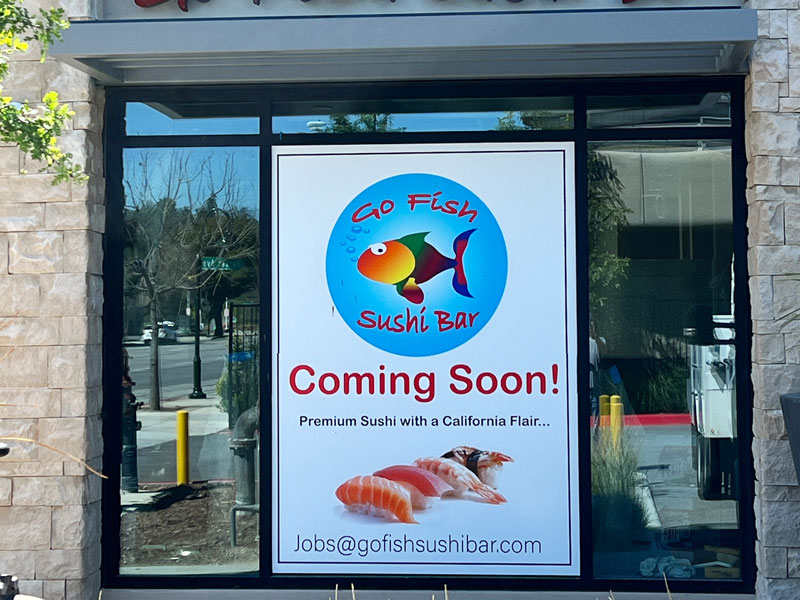
Storefront windows are valuable advertising space, especially when a business is preparing to open.
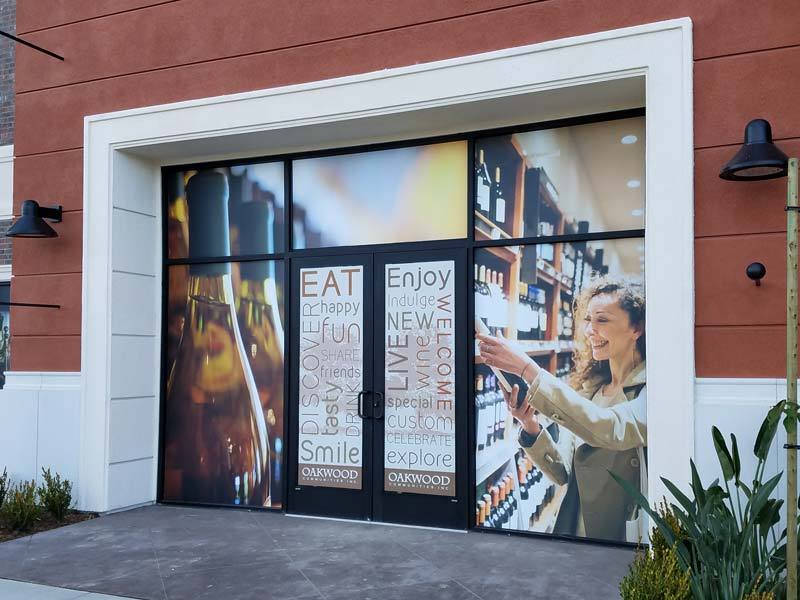
Instead of leaving windows empty or exposing an unfinished interior, temporary window graphics can introduce the business and give people a reason to look forward to the opening.
Depending on the design, window graphics can include:
- Business name and logo
- Coming-soon announcements
- Product or service photography
- Grand-opening promotions
- Website addresses and QR codes
- Social media information
Window graphics can also provide privacy while construction or interior improvements are underway.
Depending on the project, temporary graphics may use removable adhesive vinyl, window clings, or other materials selected for the glass surface and expected installation period.
Project Example: Urbane Cafe — Goleta, CA
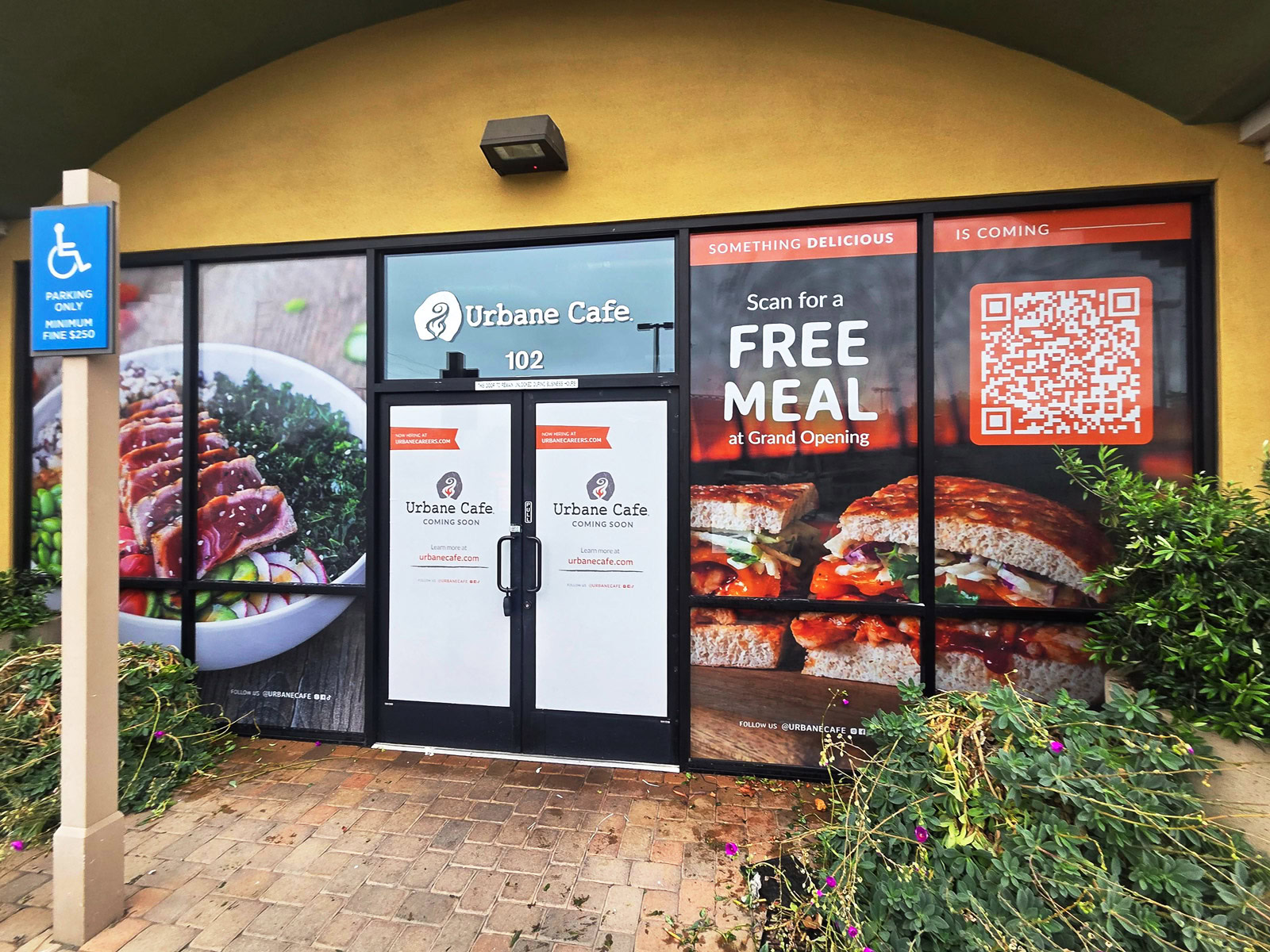
Urbane Cafe used its storefront windows to introduce the restaurant before opening.
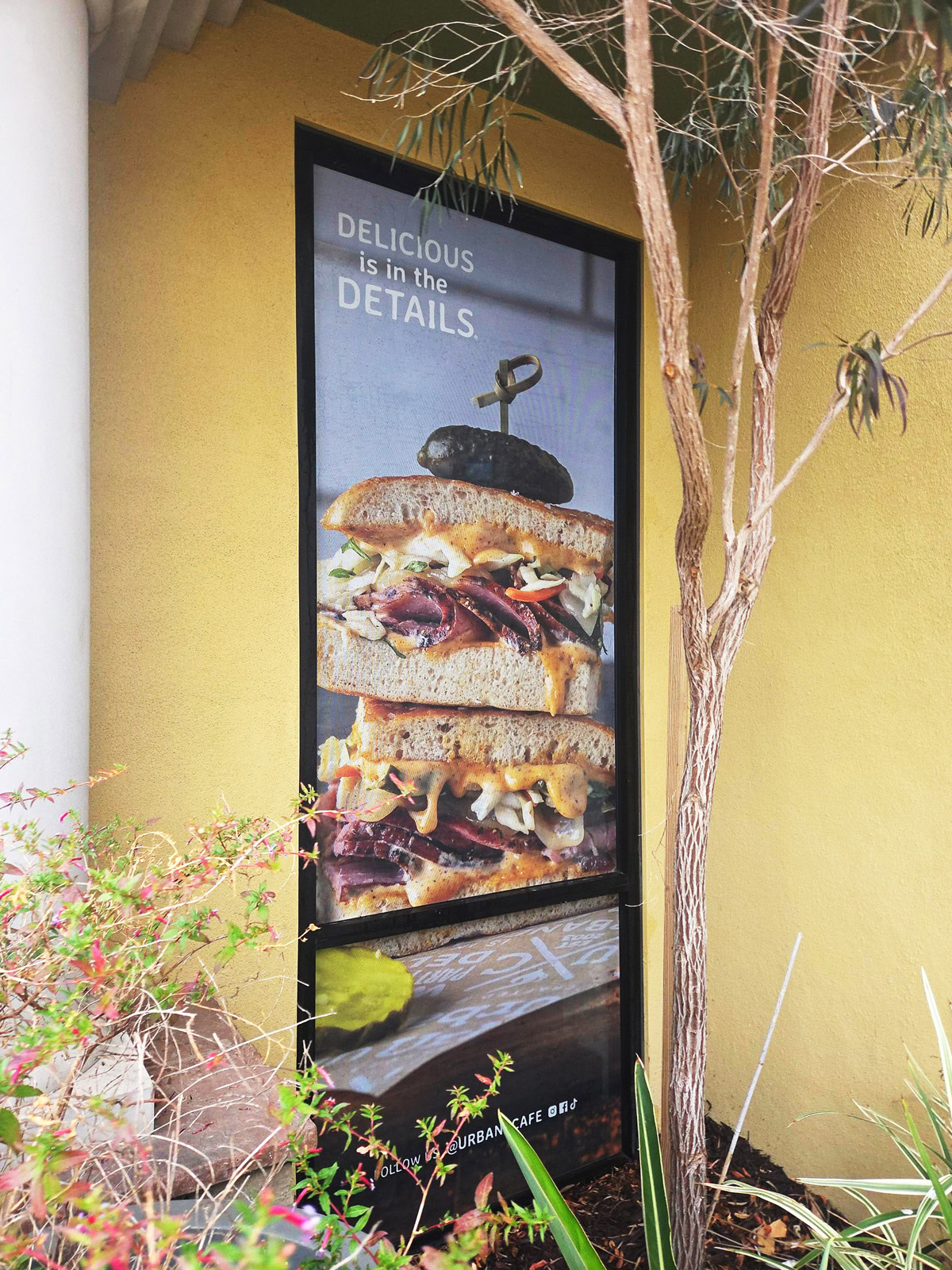
Large food photographs immediately communicate what customers can expect, while the coming-soon messaging announces the new location. A QR code and grand-opening promotion give interested customers a way to engage before the restaurant opens.
The graphics also cover much of the storefront glass, helping conceal the interior during preparations.
Why it works: The storefront starts introducing the business to future customers before opening day, turning otherwise unused window space into an opportunity to build interest.
2. Temporary Banners for Buildings and Storefronts
Banners are one of the most flexible and cost-effective temporary signage options.
They can be produced in a variety of sizes and installed in suitable locations, including building exteriors, storefronts, fences, and other approved structures.
Businesses commonly use temporary banners to announce:
- New locations
- Grand openings
- Relocations
- Temporary business identification
- Leasing availability
- Upcoming developments
For outdoor applications, vinyl banners are a popular option because they can accommodate large graphics and are available in materials designed for exterior use.
However, the location matters. In coastal areas such as Ventura and Santa Barbara, sun exposure, moisture, and wind can affect material selection and installation methods.
A banner mounted high on a building may require a different approach than one installed across a storefront.
The design is just as important as the material.
For a banner to be effective, the message should be easy to understand from the intended viewing distance. Large lettering, high-contrast colors, and a simple layout generally work better than trying to include too much information.
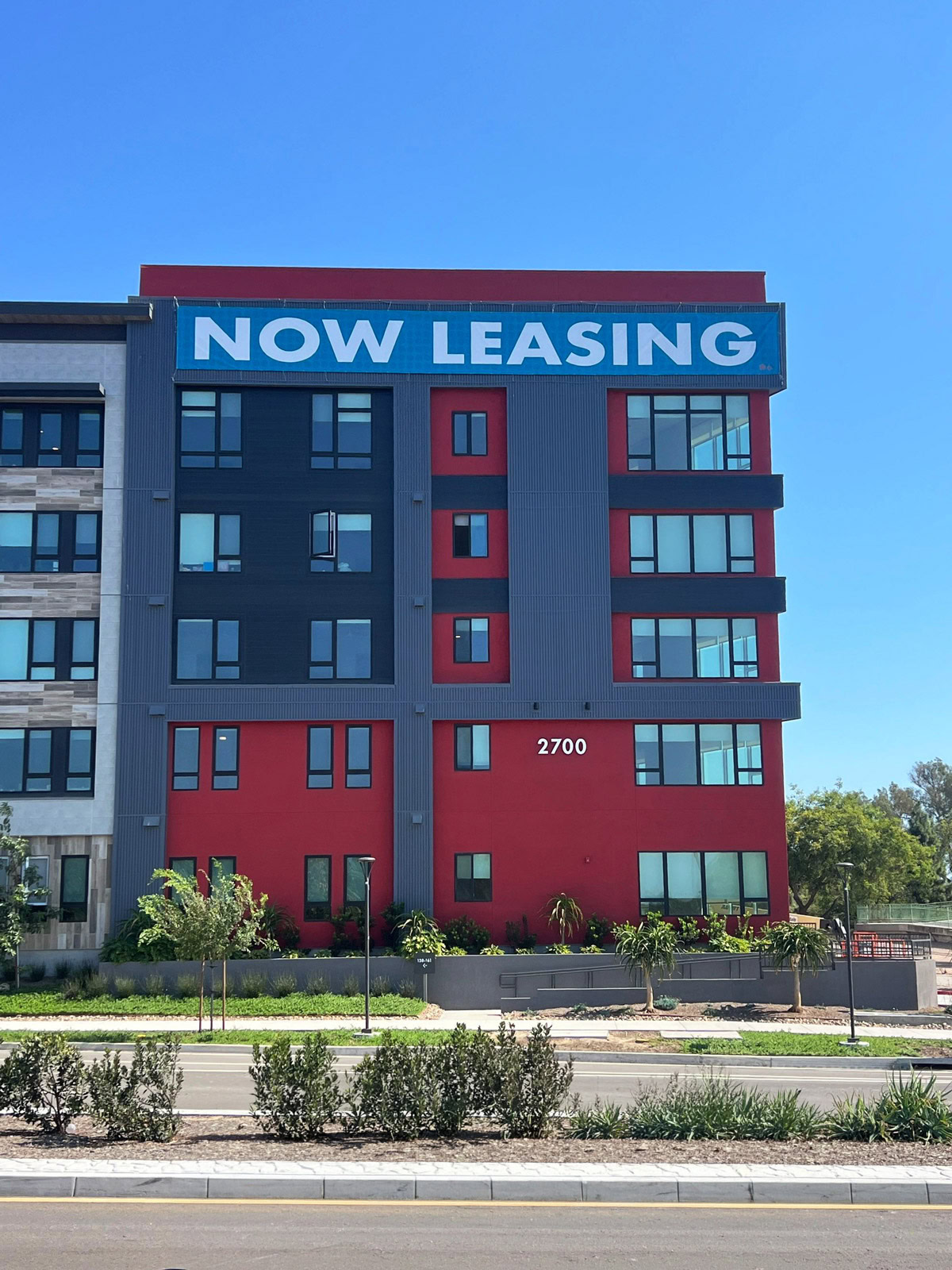
Project Example: Panorama Riverpark — Oxnard, CA
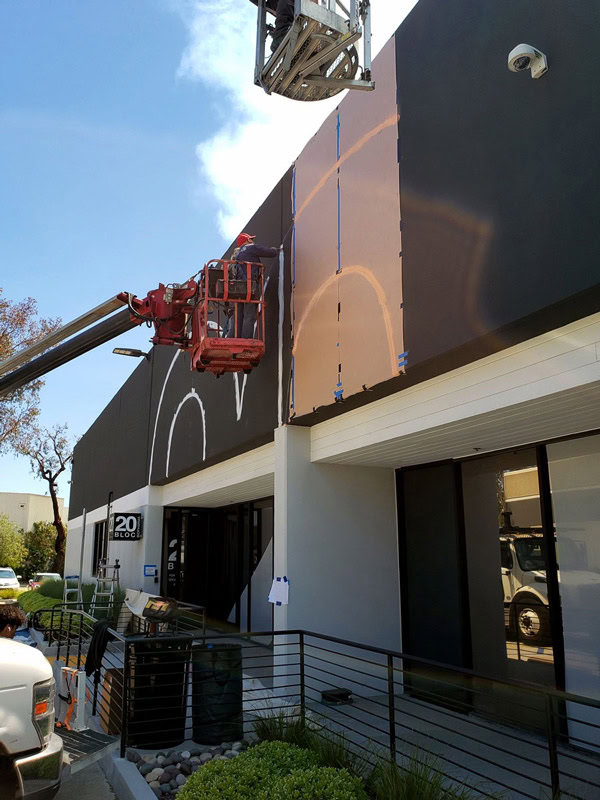
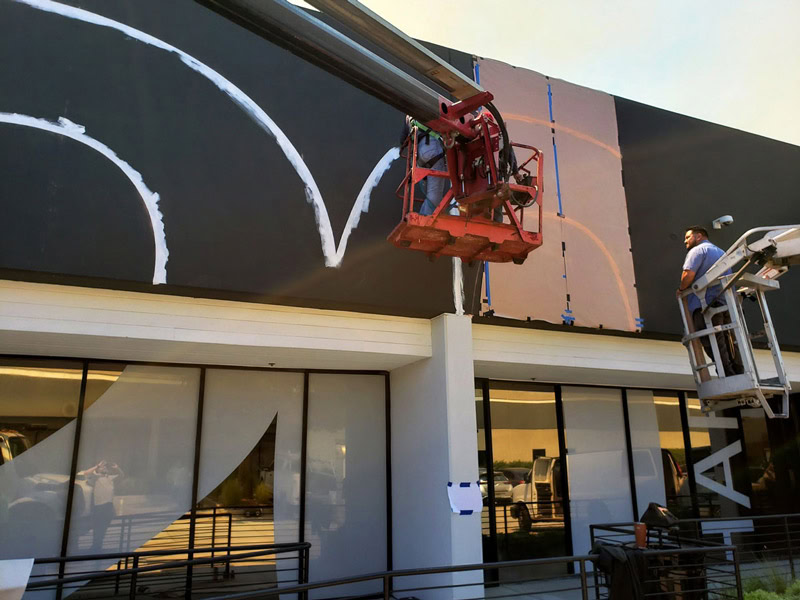
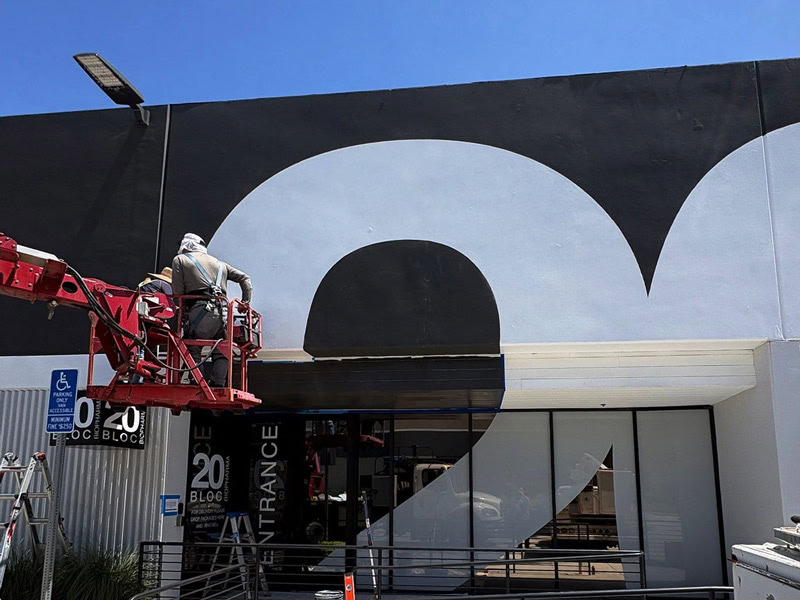
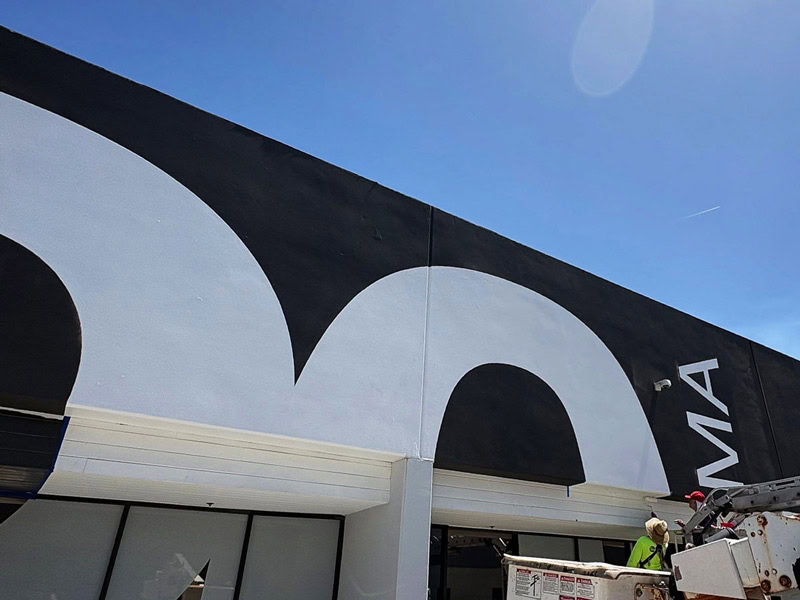
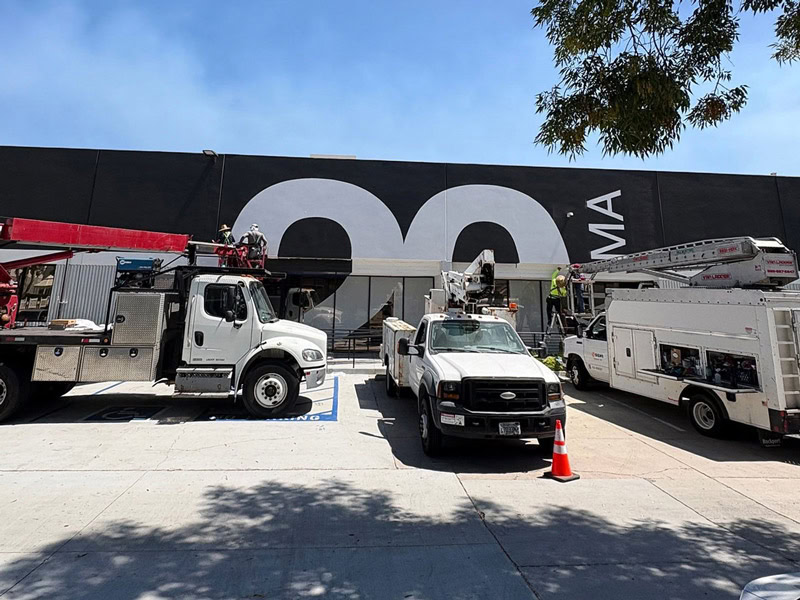
At Panorama Riverpark, Dave’s Signs designed, fabricated, and installed a large temporary building banner displaying a prominent “NOW LEASING” message near the top of the property.
The banner uses the building’s height to deliver a straightforward message to people approaching or passing the development.
Rather than trying to communicate every detail about the property, the design focuses on the information potential tenants need to notice first.
Why it works: The large lettering communicates the property’s leasing status without requiring people to stop and read a detailed advertisement.
3. Construction Fence Banners and Graphics
Construction fencing is often one of the first things people notice at a property undergoing renovation or redevelopment.
Although the fencing serves a practical purpose, it can also provide an opportunity to communicate what’s happening behind it.
Printed construction fence banners can announce future tenants, display architectural renderings, promote leasing opportunities, or simply provide a more attractive appearance during construction.
For commercial properties, this type of temporary signage can be especially useful when the finished building or tenant space isn’t yet visible.
It gives property managers and developers a way to showcase what’s coming rather than leaving visitors to guess.
Materials and installation methods should also account for how long the fencing will remain in place and the site conditions. Wind exposure is particularly important when installing large graphics on temporary fencing.
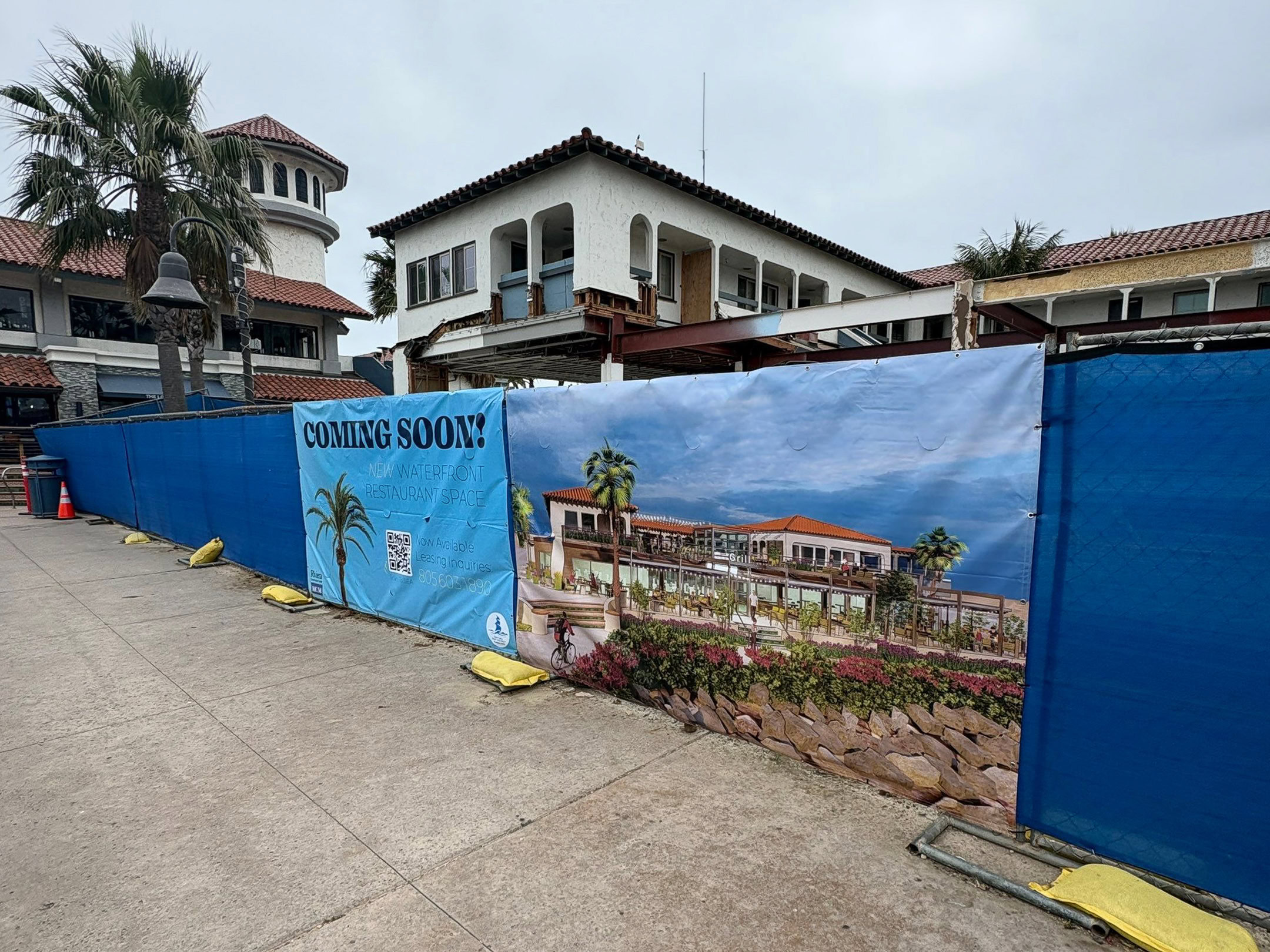
Project Example: Ventura Harbor — Ventura, CA
At Ventura Harbor, Dave’s Signs designed, fabricated, and installed temporary banners along construction fencing to announce a future waterfront restaurant space.
The graphics include a coming-soon message, leasing information, and an architectural rendering illustrating the planned development.
Instead of leaving visitors looking only at construction fencing, the signs help explain what the project will become.
Why it works: The graphics turn a construction barrier into an opportunity to communicate the project’s plans and generate interest in the available space.
4. Branded Construction Barriers and Barricades
For restaurants, retail stores, and commercial properties, temporary construction barriers can do more than separate the public from an active work area.
When designed with the business in mind, these surfaces can reinforce the brand, preview products or services, and build anticipation for an upcoming opening.
Branded barricades are especially useful in locations where customers and pedestrians regularly pass an active construction area.
Instead of a blank wall, the business can use the space to show what customers can expect once the location opens.
Depending on the project, barricade graphics may feature large-format photography, logos, opening announcements, and other brand messaging.
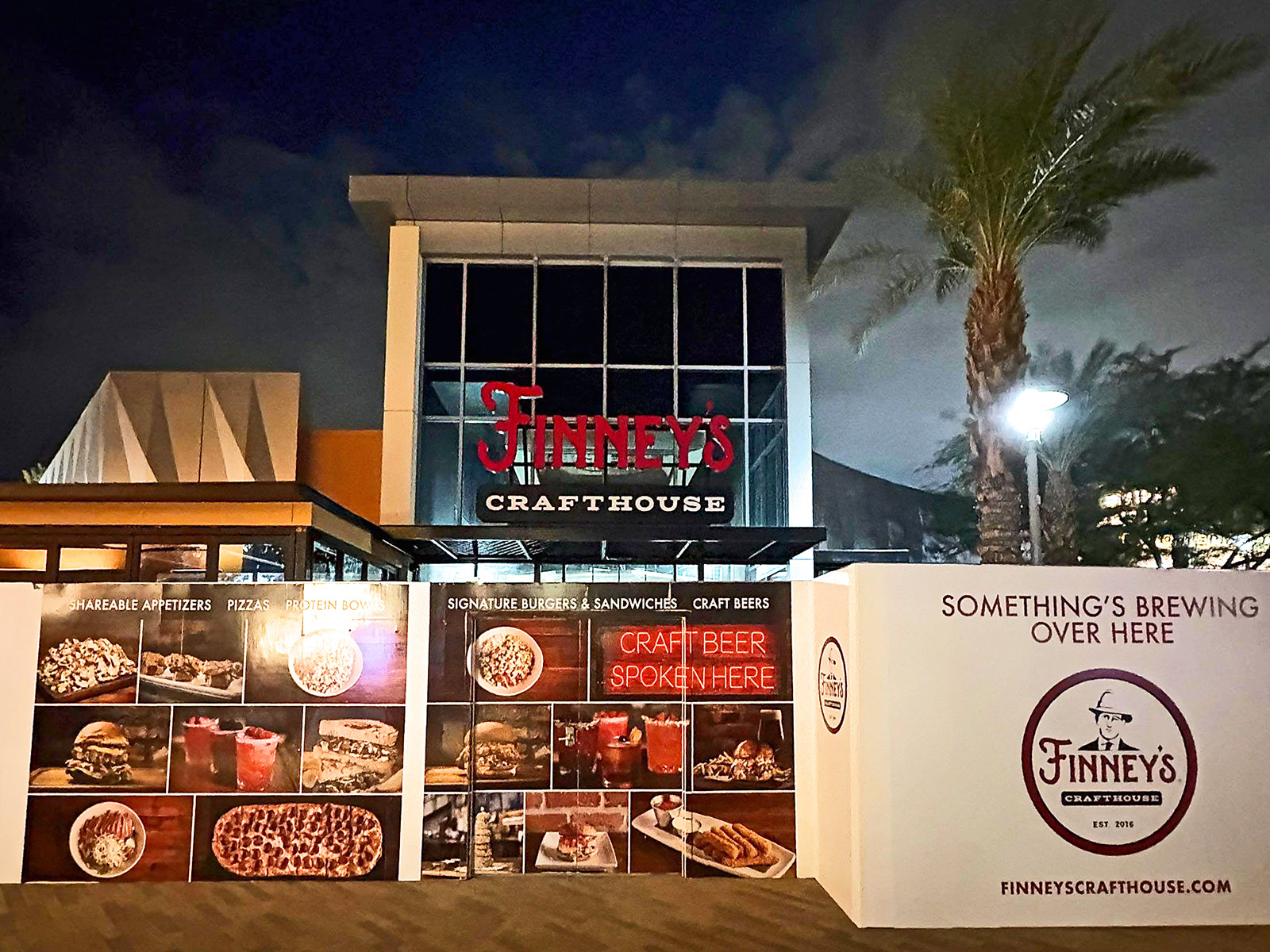
Project Example: Finney’s Crafthouse — Las Vegas, NV
At Finney’s Crafthouse, Dave’s Signs designed, fabricated, and installed branded construction barricade graphics featuring food photography, restaurant branding, and messaging about the upcoming location.
The graphics give people a preview of the restaurant while construction continues behind the barrier.
They also help establish a recognizable brand presence before the permanent exterior signs are installed.
Why it works: The temporary barrier becomes part of the restaurant’s opening campaign rather than simply hiding the construction area.
5. Planning Temporary and Permanent Signage Together
Temporary signs are often needed because permanent signage takes longer than expected.
Depending on the project, permanent signs may require landlord approval, city permits, electrical work, fabrication, and installation scheduling.
Thinking about temporary and permanent signage together can help avoid a period when your business has little or no identification.
Before ordering temporary signs, consider the following:
How long will you need them?
A banner needed for a few weeks may require a different material or installation approach than graphics expected to remain in place for several months.
The anticipated timeline can influence which materials are appropriate and how to install the signs.
Where will people see them?
Think about how customers will approach the property.
A sign intended for passing vehicles needs a different layout and lettering size than window graphics viewed by pedestrians.
Distance, viewing angle, surrounding buildings, and lighting can all affect visibility.
What is the most important message?
Are you announcing an opening, promoting available space, or identifying a temporary entrance?
Focus on the information people need most.
A clear “COMING SOON” or “NOW LEASING” message may be more effective than a sign filled with detailed information that people don’t have time to read.
What’s your budget?
Temporary signage can be a cost-effective way to promote a business before permanent signs are ready, but costs vary by project.
Materials, size, design, installation requirements, and the expected lifespan of the signs can all influence the final price.
A simple vinyl banner may work for one location, while customized window graphics or large-format construction signage may be better for another.
Will the property allow them?
Temporary signs may still require city permits or landlord approval.
Regulations can limit the size, placement, duration, and type of signage permitted on a property. Some cities also have specific rules for window coverage, temporary banners, and signs placed near public sidewalks.
These requirements can vary significantly between cities, even within the same county.
Confirm the applicable regulations before production or installation.
What happens when the permanent signs are installed?
Temporary signs should be part of the overall signage plan, not something considered only after a delay occurs.
Coordinating their removal or replacement with permanent sign installation can help make the transition easier.
It also allows the business to maintain a consistent appearance from the initial coming-soon announcement through opening day.
Temporary Doesn’t Have to Mean an Afterthought
Temporary signs may only be installed for a few weeks or months, but they can serve an important purpose during that time.
Whether you’re opening a restaurant, renovating a storefront, leasing a commercial property, or developing a new building, temporary signage can help people understand what’s happening and what to expect.
It can also start introducing your business to potential customers long before your doors open.
The best approach is to consider your location, audience, timeline, budget, and permanent signage plans before deciding which temporary signs make sense.
Planning a Temporary Sign Project?
Dave’s Signs designs, fabricates, and installs temporary and permanent commercial signage for businesses, property managers, and developers throughout Southern California.
From coming-soon window graphics and construction fence banners to large-format building signs, we can help you plan the right signage for your property and timeline.
We’d be happy to take a look and talk through the options.
Call us at (805) 641-1387, Request a Quote, or Contact Us online —whatever works best for you.