Illuminated Storefront Signs: A Guide to Better Nighttime Visibility
Your storefront sign has to work during the day, but for many businesses, its job doesn’t stop when the sun goes down.
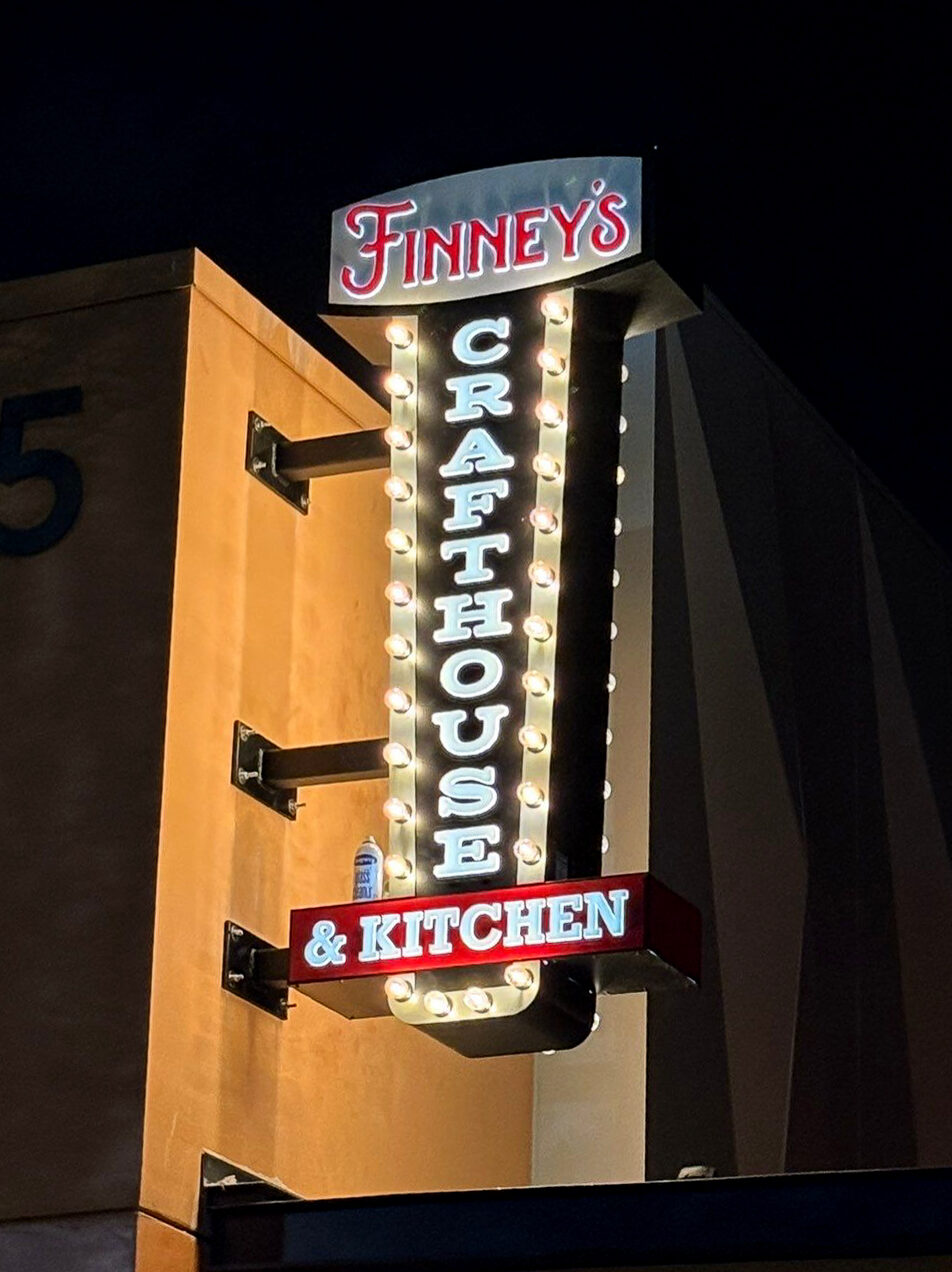
Restaurants, retail stores, fitness centers, hotels, medical offices, banks, entertainment venues, and other businesses often depend on illuminated storefront signs to help customers find their location, recognize their brand, and distinguish the business from everything around it.
The key is not simply making a sign light up.
A good illuminated storefront sign is designed around the building, viewing distance, surrounding lighting, brand identity, and the way customers actually approach the property.
Why Storefront Lighting Matters
A storefront sign may look clear and attractive during daylight hours but become difficult to see after dark.
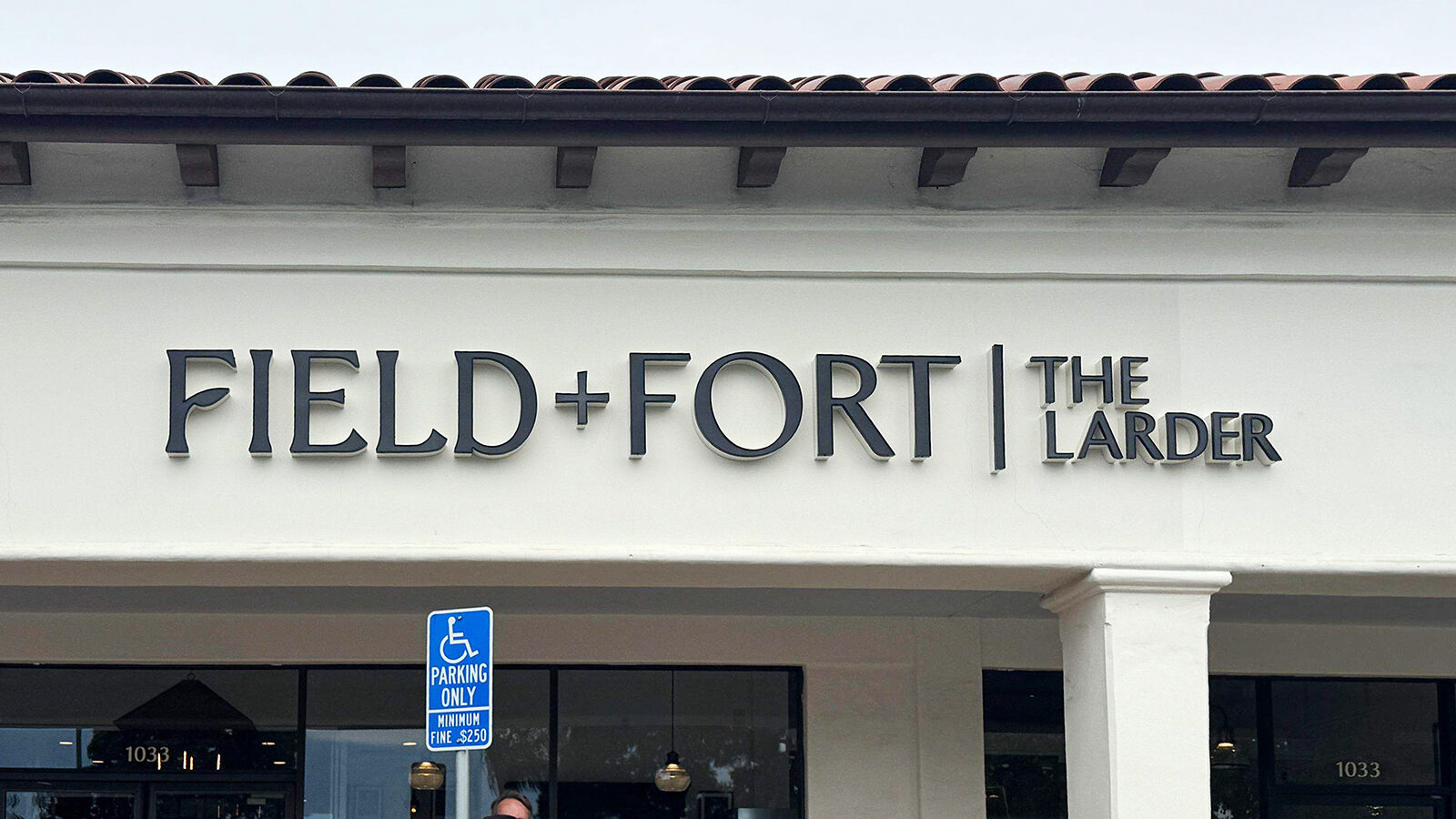
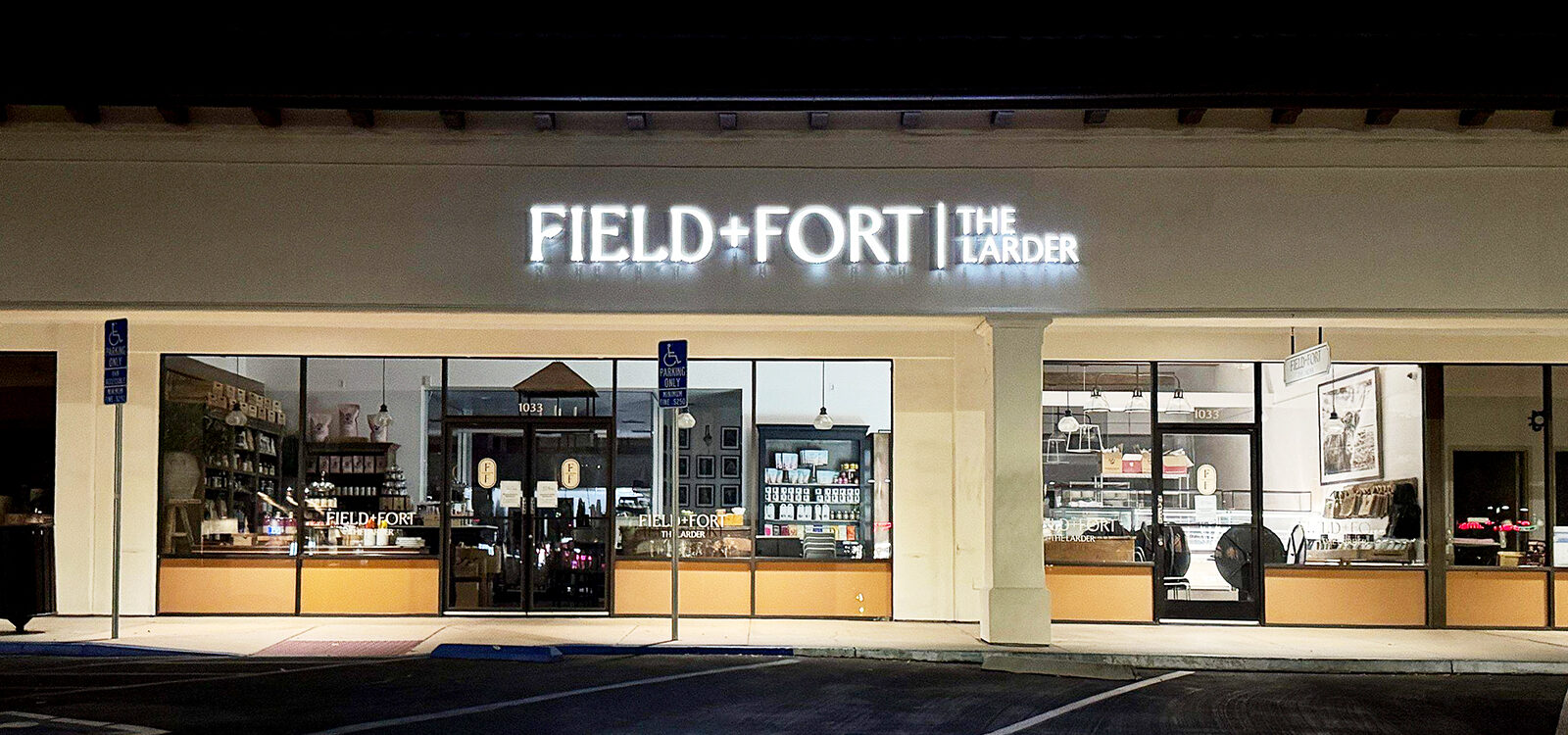
Illumination extends the sign’s visibility into the evening.
For businesses that stay open at night, that makes the location easier for customers to find. Even when the business is closed, an illuminated sign can continue building familiarity with people driving or walking past the property.
That repeated business visibility has value.
A customer may see your storefront dozens of times before they ever need what you sell. When the time comes, recognizing the business and knowing where it is can make the decision easier.
The goal isn’t to make the storefront as bright as possible.
It’s to enhance visibility and make the business easy to see, identify, and remember.
Design the Sign for Its Surroundings
One of the most important parts of designing illuminated exterior signs is understanding where they will be installed.
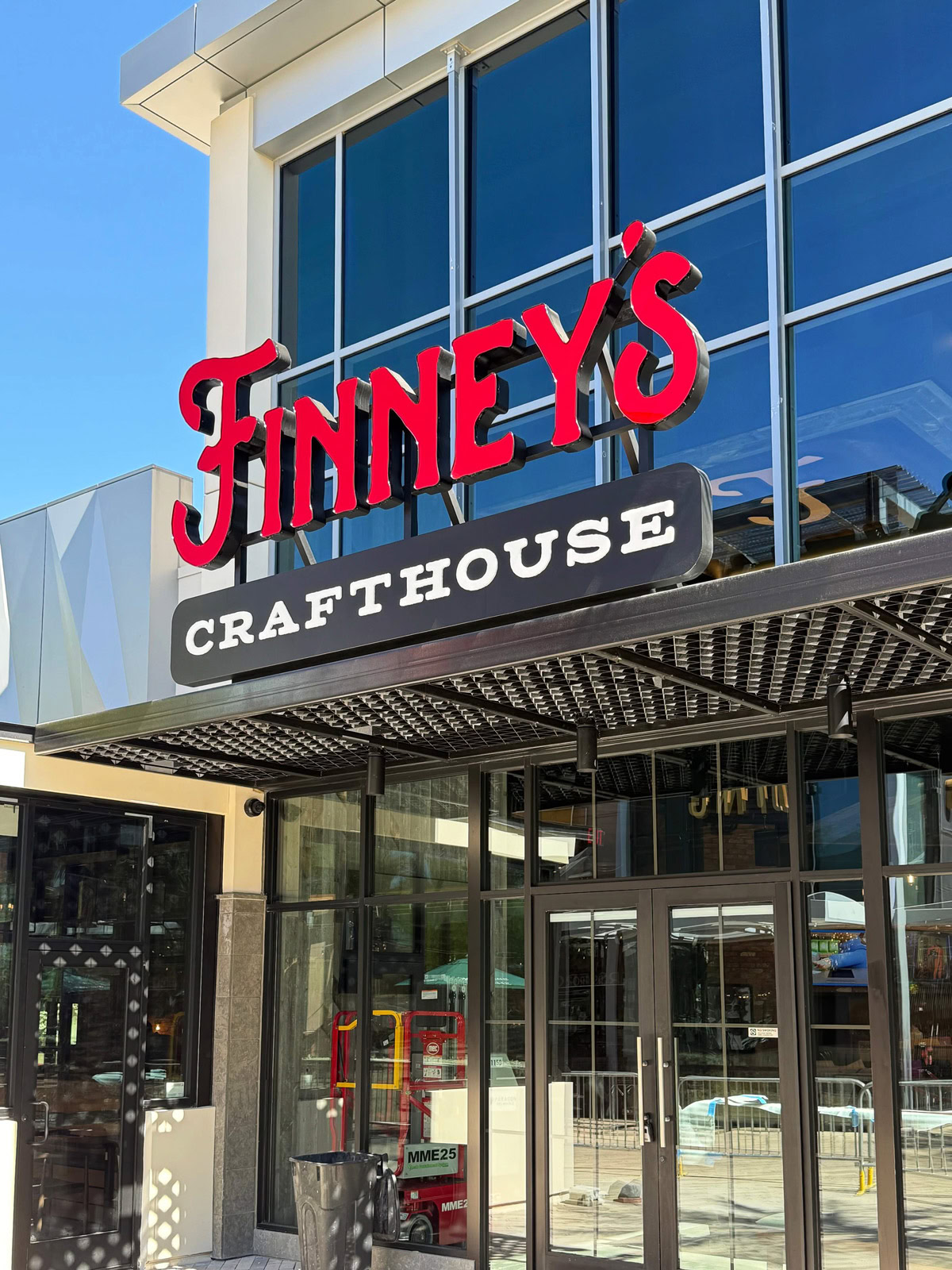
A sign on a darker standalone building has very different lighting requirements than a storefront surrounded by brightly illuminated businesses.
Viewing distance matters too.
Customers may be:
- Driving past the building at street speed
- Entering a shopping center
- Looking across a large parking lot
- Walking along a retail street
- Trying to identify one business among several neighboring storefronts
The sign needs to communicate quickly from the places where customers are most likely to see it.
Letter size, spacing, contrast, sign placement, mounting height, building color, surrounding light sources, and illumination all affect visibility.
That’s why good storefront sign design starts with the property—not just the logo.
Choosing the Right Type of Illuminated Storefront Sign
No single lighting style works best for every business.
Different types of illuminated signs create very different appearances.

Front-Lit Channel Letters
Front-lit channel letters are one of the most common choices for commercial storefronts.

Each letter or brand logo element is individually fabricated and internally illuminated, so the sign face lights up at night.
These individual letters offer strong visibility and work well for many retail stores, restaurants, medical offices, financial institutions, and other commercial businesses.
Channel letters can also reproduce brand logos and colors while adding more dimension than a flat sign panel.
Halo-Lit or Reverse-Lit Letters
Halo-lit letters create a softer lighting effect.
Instead of primarily illuminating the face of the letter, light is directed toward the wall behind it, creating a warm glow around the lettering.

This can give the storefront a more architectural or refined appearance.
The effectiveness of halo lighting depends heavily on the wall behind the sign. Surface texture, color, distance from the wall, and surrounding lighting can all affect how clearly the halo shows.
Illuminated Lightboxes and Cabinet Signs
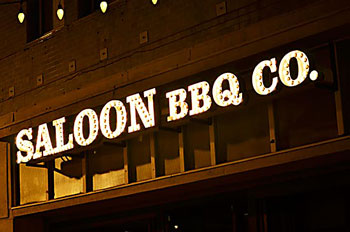
A lightbox sign or internally illuminated sign cabinet can provide strong nighttime visibility while allowing a larger sign face, logo, or graphic to be illuminated.
They can work particularly well when the sign design includes more than lettering alone.

A recent Community America Credit Union project in Camarillo, for example, combined dimensional channel lettering with an illuminated lightbox to carry the brand across different areas of the building.
Using more than one sign type can help maintain consistency while adapting the signage to the architecture.
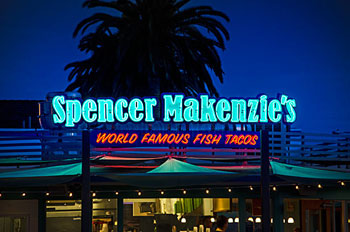
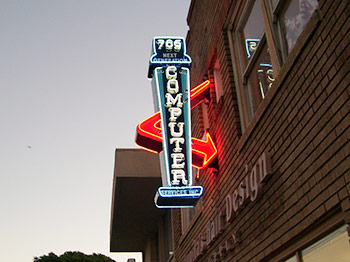
Neon Signs
Neon remains a good option when the lighting itself is meant to become part of the business’s character.

Restaurants, bars, entertainment businesses, and specialty retailers often use neon signage because it creates a distinctive look that is hard to duplicate with other sign types.
The right choice depends on the look the business wants to create.
The Best Illuminated Sign Isn’t Necessarily the Brightest
More light does not automatically mean better visibility.
Contrast matters as much.
A very bright sign installed against an already brightly illuminated background can actually become harder to distinguish.
The same applies to color.
A sign that looks great during the day may appear very different once it is illuminated at night.
Good sign design considers both conditions.
The sign should look intentional during daylight hours and remain clear and recognizable when illuminated after dark.

Sometimes that means strong front illumination.
It could mean a softer halo.
Or a combination of different illuminated sign types works best.
The environment should help determine the solution.
Storefront Lighting for Different Types of Businesses
The way a sign is used often changes depending on the business.
Retail Stores
Retail signs need to be recognizable from the street, parking lot, or shopping center entrance.

Good contrast and clear lettering are especially important when the storefront is surrounded by other business signs competing for attention.

In shopping malls and larger retail centers, high visibility becomes even more important because customers may be trying to identify one storefront among many.
Restaurants
Restaurants often depend more heavily on nighttime visibility.


An illuminated storefront sign can help customers find the restaurant while also contributing to the property’s overall atmosphere.
Lighting can become part of the experience, not just a way to display the business name.

Hotels and Hospitality
Hospitality venues often need signage that works from a distance and helps guide guests unfamiliar with the property.

Building signs, monument signs, directional signs, and entrance signage may all need to work together.


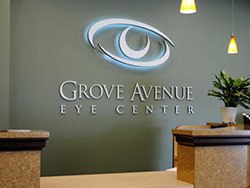
Medical, Financial, and Professional Offices
For medical offices, banks, credit unions, office buildings, and other professional businesses, the goal is usually clarity and confidence rather than maximum brightness.


Clean illuminated lettering can help make the property easy to identify while maintaining a professional appearance.

Illuminated Signs for Multi-Location Businesses
Businesses with multiple locations have another consideration: consistency.
A brand may want the same general sign appearance at every location, but every building is different.
One storefront may allow large channel letters directly above the entrance. Another may have architectural restrictions, landlord requirements, limited wall space, different mounting options, or different local sign regulations.
The challenge is maintaining the brand while adapting the signage to each property.


That becomes especially important for franchise businesses, restaurant groups, retailers, banks, medical providers, and other companies opening multiple locations.
The best approach establishes a recognizable sign system without forcing the same custom sign solution onto every building.
LED Illuminated Signs and Modern Storefront Lighting
LED lighting is now widely used in commercial illuminated signage.
LED modules are compact, energy-efficient, and can be incorporated into channel letters, lightboxes, logos, and many other sign types.
Modern LED illuminated signs can also provide consistent lighting inside relatively shallow sign cabinets and letters while delivering long-lasting performance.

For businesses with older illuminated signs, an LED retrofit may be an option.
Instead of replacing the entire sign, you may update an existing cabinet or sign structure with modern lighting components when the sign’s condition and design make that practical.
We can inspect the existing sign and determine whether repairing, retrofitting, or replacing it makes the most sense.


Your Building and Local Sign Code Matter
The sign design also has to work with the property.
Many shopping centers, shopping malls, multi-tenant buildings, and commercial landlords have sign criteria that regulate:
- Sign size
- Placement
- Letter height
- Colors
- Sign types
- Illumination
- Mounting methods
Cities may have additional sign ordinances and permitting requirements.
Consider those restrictions early in the design process.
There’s little benefit in developing a sign concept that looks great on paper but can’t be approved for the building.
A complete sign project may involve property surveys, design, landlord approval, permitting, engineering, fabrication, electrical work, professional installation, and final inspection.
Planning those pieces together makes the process much easier.

Are Illuminated Storefront Signs Worth the Investment?
For many businesses, yes.
A storefront sign differs from most advertising because it becomes a permanent part of the property.
Customers may see it every time they drive past, shop nearby, visit another business downtown, or return to your store.
Illumination extends that visibility into the evening.
But the real value isn’t simply that the sign lights up.
A well-designed illuminated storefront sign can:
- Make the business easier to locate
- Improve nighttime visibility
- Reinforce brand recognition
- Help the storefront stand out from neighboring businesses.
- Create a more finished appearance for the building.
- Continue promoting the business after dark.
The best illuminated signs don’t look like an afterthought.
The lighting, lettering, logo, architecture, and surrounding environment should work together.

What to Consider Before Choosing an Illuminated Storefront Sign
Before deciding on a sign, look at the property from the customer’s perspective.
Consider:
- How far away does the sign need to be readable?
- Will most customers see it while driving or walking?
- How bright is the surrounding area at night?
- What color and texture is the building?
- Where are the best sight lines?
- Are there landlord sign criteria?
- What does the local sign code allow?
- Does the brand call for strong illumination or something more subtle?
- What mounting options work with the building?
- Will the sign be easy to access when maintenance is eventually required?
These decisions can make as much difference as the sign type itself.
Planning an Illuminated Storefront Sign
Dave’s Signs designs, permits, fabricates, installs, services, and repairs illuminated storefront signs throughout Ventura, Santa Barbara, and Los Angeles counties.

We also work with multi-location businesses that need consistent signage across different properties and markets.
If you’re opening a new location, replacing an older storefront sign, or trying to determine which type of illumination will work best for your building, give us a call or request a quote.
We’re happy to help you work through the options.